
Losing several or all of your teeth changes much more than your smile. Everyday activities such as eating lunch, speaking during a meeting, laughing with friends, or enjoying dinner with family can become frustrating when dentures move or feel uncomfortable. For people in Ashburn, VA, who rely on dentures to replace missing teeth, the difference between a restoration that simply fills the gaps and one that feels stable during daily activities can have a major effect on comfort and confidence.
Working with an experienced dentist in Ashburn, VA can help you understand whether traditional dentures or overdentures are better suited to your oral health, lifestyle, and long-term needs. Simply Smiles provides restorative dental care, including overdentures, for patients in Ashburn and surrounding communities. This guide explains how overdentures differ from conventional dentures, why stability matters, how implants or remaining natural teeth can provide additional support, and what patients should consider before choosing an option.
Table of Contents
- Traditional Dentures vs. Overdentures: What Is the Difference?
- Why Denture Stability Can Change Everyday Life
- How Implant-Supported Overdentures Affect the Jaw
- Which Type of Denture Is Right for You?
- Frequently Asked Questions
Traditional Dentures vs. Overdentures: What Is the Difference?
Traditional dentures and overdentures share the same basic purpose: replacing missing teeth so a patient can regain important oral functions and restore the appearance of the smile. The major difference is how the restoration receives its support. Understanding that distinction is important when discussing tooth replacement with your dentist in Ashburn, VA.
A traditional complete denture rests on the gums and underlying tissues. Its fit depends on the shape of the mouth, suction, muscle control, and other factors. Although a properly fitted traditional denture can provide an effective solution for many patients, dentures can feel unfamiliar at first. The American Dental Association’s MouthHealthy resource on dentures notes that new dentures may initially feel awkward or loose while the muscles of the cheeks and tongue learn to keep them in place.
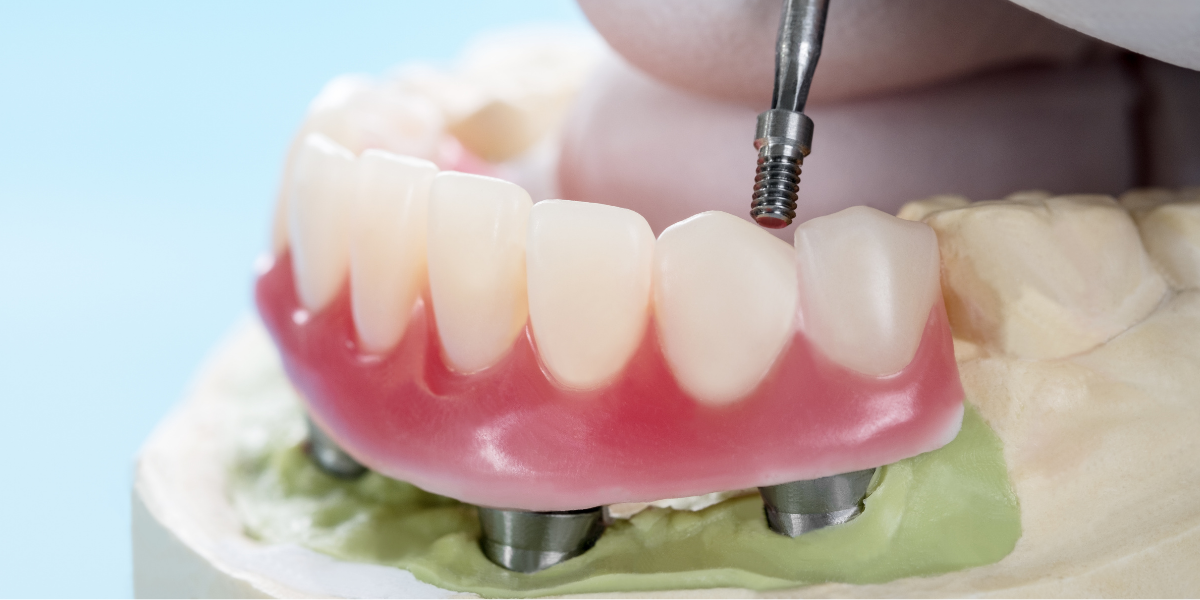
Overdentures use additional support. Depending on the patient’s oral health, an overdenture may fit over prepared natural teeth or attach to dental implants. These supporting structures help hold the restoration more securely. Simply Smiles offers both natural tooth-supported and implant-supported overdenture options based on individual patient needs.
This extra support may seem like a small technical difference, but it can have a noticeable effect on how a denture functions throughout the day.
Why Denture Stability Can Change Everyday Life
One of the most common concerns associated with removable dentures is movement. A denture that shifts while eating or speaking can make a person more conscious of their teeth during situations that once required no thought at all.
Greater stability is one of the main advantages of overdentures. Because an overdenture receives support from natural teeth or dental implants, it can provide better retention than a conventional denture that relies primarily on the gums for support.
That additional stability may help with:
- Chewing a wider variety of appropriate foods
- Speaking more comfortably
- Reducing unwanted denture movement
- Improving comfort during everyday activities
- Reducing worry about dentures shifting in social settings
This does not mean an overdenture functions exactly like natural teeth. Patients still need time to adjust, and removable overdentures require consistent cleaning and professional maintenance. However, reducing unwanted movement can make a meaningful difference for people who have struggled with loose or unstable dentures.
Patients interested in this option can learn more about overdentures in Ashburn, VA through Simply Smiles. A dental evaluation can determine whether remaining teeth, implants, or another restorative approach could provide the appropriate foundation.
How Implant-Supported Overdentures Affect the Jaw
The difference between overdentures and traditional dentures goes deeper than what patients can see. When teeth are lost, the jaw no longer receives the same stimulation that natural tooth roots once provided. Changes to the supporting bone can occur over time after tooth loss.
Dental implants are placed within the jawbone and act as anchors for a restoration. For an implant-supported overdenture, the implants provide attachment points that help stabilize the denture. Simply Smiles notes that implant-supported overdentures commonly use multiple implants to provide a secure foundation, although the exact number needed depends on the patient’s individual treatment plan.
Preserving available bone is an important consideration in implant dentistry. Implant-supported restorations transfer forces into the jaw during function, which is one reason implants are frequently considered when planning long-term tooth replacement.
Not everyone is automatically a candidate for dental implants. Bone quantity and quality, gum health, medical history, smoking, oral hygiene, and other factors may affect treatment planning. Diagnostic imaging can help a dentist assess the jaw and determine whether implant placement is appropriate.
This individualized evaluation is particularly important because no two cases of tooth loss are identical. A patient who recently lost several teeth may have very different needs from someone who has worn complete dentures for many years. A dentist in Ashburn, VA can evaluate these differences before recommending a treatment plan.
Which Type of Denture Is Right for You?
Traditional dentures have not become obsolete because overdentures are available. Conventional dentures remain a practical tooth-replacement option for many patients, particularly those who are unable or do not wish to undergo implant treatment.
The right choice depends on several factors, including:
- Number and condition of remaining teeth
- Gum and jawbone health
- Current denture fit
- Ability to undergo implant placement
- Desired level of stability
- Oral hygiene habits
- Treatment timeline
- Budget and insurance considerations
Patients who have healthy remaining teeth may be candidates for a tooth-supported overdenture. Others may benefit from implant-supported overdentures. Traditional dentures may still be the preferred solution when surgery is not recommended or when a simpler removable restoration better fits the patient’s needs.
An evaluation also provides an opportunity to discuss expectations. No denture option should be selected based only on what appears most advanced. The goal is to choose a restoration that works with your oral health and provides predictable function.
Simply Smiles also provides restorative dentistry in Ashburn, VA for patients dealing with missing, damaged, or compromised teeth. Having access to different restorative options allows treatment to be planned around the patient’s specific condition rather than applying the same solution to everyone.
Regular follow-up remains important regardless of the type of denture selected. The mouth can change over time, and dentures may eventually require adjustments, relining, repair, or replacement. Implant-supported overdentures also require professional monitoring of the implants, gums, attachments, and restoration.
Frequently Asked Questions About Overdentures in Ashburn, VA
Are overdentures better than traditional dentures?
Neither option is automatically better for every patient. Overdentures generally provide greater stability because they receive support from implants or remaining natural teeth. Traditional dentures can still provide an effective tooth-replacement solution for patients who prefer a non-implant approach or are not candidates for implant treatment.
Do overdentures come out at night?
Many overdentures are removable and should be removed according to your dentist’s instructions. Removing them can give oral tissues time to rest and makes thorough cleaning easier. Implant-supported overdentures can have different designs, so your dentist will explain how your specific restoration should be worn, removed, cleaned, and stored.
How many implants are needed for an overdenture?
The number varies according to the patient’s anatomy and treatment plan. Simply Smiles explains that implant-supported overdentures may commonly use two to four implants for support. Bone condition, implant position, the type of restoration, and individual treatment goals all influence the final recommendation.
Can you eat normally with overdentures?
Overdentures may provide greater stability during chewing than conventional dentures, but patients generally need an adjustment period. Your dentist may recommend beginning with softer foods and gradually introducing other foods as you become comfortable. Extremely hard or sticky foods may still need to be limited depending on the restoration.
How do I know if I am a candidate for overdentures?
A dental examination is the most reliable way to find out. Your dentist will evaluate your gums, remaining teeth, jawbone, medical history, and current restoration. If implants are being considered, diagnostic imaging may also be needed to determine whether sufficient bone is available and whether additional procedures should be considered.
Conclusion
Traditional dentures and overdentures can both restore missing teeth, but they approach stability differently. Traditional dentures rely largely on the gums and oral anatomy for support, while overdentures use remaining natural teeth or dental implants as additional anchors. For the right patient, that difference can mean greater stability during eating, speaking, and other everyday activities.
Simply Smiles provides personalized restorative care for patients seeking a dentist in Ashburn, VA. Rather than assuming one tooth-replacement option is right for everyone, the team evaluates oral health, existing bone and teeth, personal goals, and long-term needs to help patients understand their available choices.
Find Out Whether Overdentures Are Right for Your Smile
If loose dentures are making it harder to eat, speak, or feel comfortable throughout your day, you do not have to simply accept the problem. Contact Simply Smiles to schedule an evaluation and learn whether traditional dentures, overdentures, or an implant-supported solution may be appropriate for you.